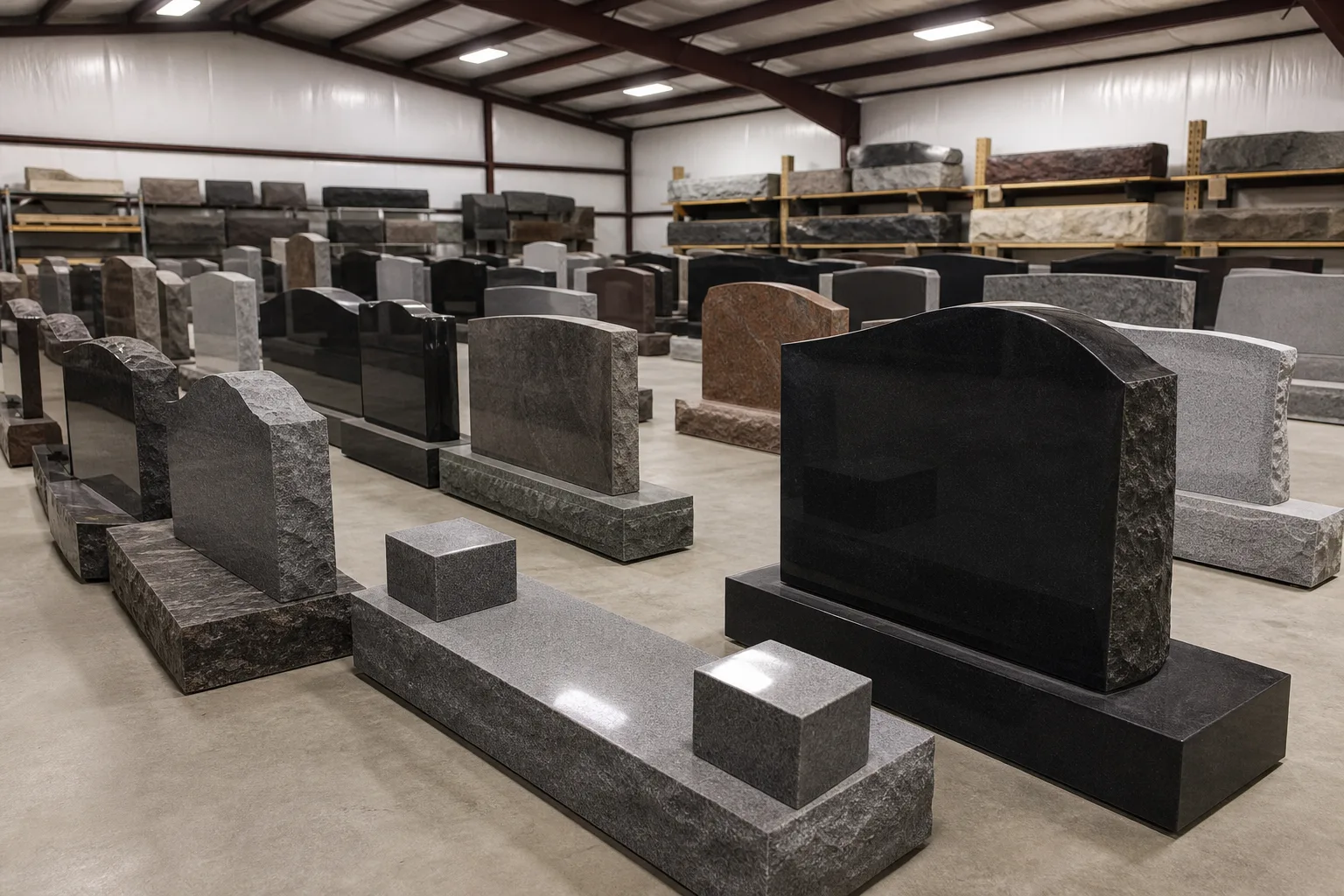
The quote arrived as a single page with six lines on it, and the first thing worth noticing was that only four of them described work the monument dealer would actually perform. The other two were pass-throughs, money collected by the dealer and handed to the cemetery, and the dealer had no more control over their size than the buyer did. That distinction is the whole exercise. A careful reader separates the sheet into what the seller sets, what the burial ground sets, and what the state sets, because the negotiation only exists in the first column.
The block is one line and three separate decisions
The largest number on most quotes is the stone itself, and it is usually written as a single item with a color name, a size in inches, and a finish. Inside that number sit three choices that move the price independently: the quarry the granite comes from, the dimensions, and how many faces are polished. A common gray from a domestic quarry costs less than a saturated red or a dense black, and a stone polished on two faces costs less than one polished all around. Ask the dealer to price the same design in a second color and a second size before agreeing to anything.
Thickness deserves its own question. Many cemeteries set a minimum thickness for upright markers and a minimum base width, and dealers quote to the minimum unless told otherwise, which is reasonable but worth confirming. A stone quoted at the cemetery floor is not being cheapened; it is being built to the rule. What a careful reader checks is whether the quoted dimensions match the plot's allowance, because a stone ordered an inch over the limit is a stone the cemetery can refuse at the gate, and granite cut to size does not go back.
Carving is priced per letter, per design, or per panel
Sandblast lettering is normally billed by the character, which is why a full middle name and a two-line verse land differently on the invoice than they do in conversation. Ornament is billed by the design, drawn from the dealer's catalog, and a stock rose or cross costs a fraction of a custom drawing that a shop artist must lay out from scratch. Laser etching of a photograph or a scene is priced by the panel and is a separate skill from blasting. Ask which method the quote assumes, because the two are not interchangeable and only one is easy to add later.
Foundation, setting, and the cemetery's own charge
Under nearly every upright monument sits a poured concrete foundation, and this is where quotes diverge most sharply. Some cemeteries pour their own foundations and bill the family directly, at a rate tied to the footprint of the base. Others let the dealer pour, subject to inspection. A few permit neither and require their crew to do the entire installation, in which case the dealer's line for delivery and setting shrinks to freight and the cemetery's line grows. Read both documents together, because the same work described twice, once by each party, is the most common way a family pays for it twice.
Then there is the charge that buys nothing physical: a setting permit, an inspection fee, or a recording fee for the memorial's placement in the cemetery's records. It is real, it is generally non-negotiable, and it belongs on the quote as a separate line rather than folded into installation. The Federal Trade Commission is responsible for the federal rules governing how funeral goods and services are disclosed to buyers, and the habit that rule encourages, itemization on paper before money changes hands, is exactly the habit to apply here.
Tax, exclusions, and the lines that move
Sales tax applies to the stone in most states, and whether it also applies to installation labor varies, so a quote showing tax on the full total is worth one question rather than an assumption. Standard exclusions are predictable once you know to look: vases, second-date inscriptions after a later death, ground restoration, and any repair the cemetery performs after settling. The lines that genuinely move are stone color, size, finish count, ornament complexity, and sometimes freight if the shop has another delivery going to the same grounds. Foundation rates and cemetery fees do not move, and a dealer who says so is being straight with you.
Ask for the revised quote in writing after every change, and keep the cemetery's rule sheet stapled to it. The paperwork that survives the order is what settles any argument at installation.